20 Good Pieces Of Advice For Picking Termite Extermination Services In Jakarta
Wiki Article
Jakarta Homes: Subterranean Termite Defense
Walk through any Jakarta neighborhood--Menteng, Kebayoran Baru, Kelapa Gading--and you will see them: door frames swollen at the base, fine brown lines climbing foundation walls, tiny pinprick holes in skirting boards. Most homeowners mistakenly believe this to be wear and tear. It's not. This is proof that a subterranean termite colony has already entered the building and is feeding twenty-four days a week all week long, fueled by Jakarta's relentless humidity, and also the unintentional invitation that contemporary construction techniques. For a Jakarta-based home, the best way to protect it is to ignore all of the imported pest control guides, and instead use methods specifically calibrated to the soil type, species and climate.
1. The Door Frame and Window Epidemic
Jakarta termites can't explode concrete slabs. They enter at the top of the person's height where wood meets concrete. The majority of documented termite attacks occur in windowsills, door jambs, and wooden frames embedded in brick walls. Anti-termite services that arrive with drills and rods directed at the floor slab are fighting a war that is not theirs. The real fight is at waist level where water condenses onto glass and seeps in through untreated wood.
2. Four Species, One City, Different Rules
Jakarta has at least 4 distinct species of subterranean termites. The different species of termites are not the same. Coptotermes stroi is a structural invader which is aggressive. Microtermes insperatus, despite being the dominant species numerically, is not as destructive. Macrotermes gilvus builds visible mounds in gardens. Coptotermes Curvignathus prefers to live trees but will migrate inside homes when the wood is not enough. They are not able to be picked by pest control workers who are not able to distinguish between them.
3. The Six-Week Truth
The elimination of colonies is not a legitimate process that happens overnight. It can take up to eight weeks for the poison to be distributed throughout the colony. Pest control companies who sell contact poisons promise a twenty-four hours of eradication. However, they will only kill foragers at the surface, while the reproductive center remains underground.
4. Above-Ground Stations Change Everything
A perimeter station can be useful for surveillance, but ineffective to stop an infestation that has already taken place within the building. Above-ground stations--small bait cartridges locked directly on mud tubes--push toxicant into the colony's highway. Jakarta exterminators who do not operate above-ground stations are selling inspection, not treatment.
5. The Soil Moisture Trap
Jakarta's clay silts soils hold water. Termites prefer environments in which soil moisture is greater than twenty-two per cent. The anti-termite treatment that injects chemicals, without assessing drain, downspout, and irrigation, is putting expensive poison in a habitat termites love to call home.
6. Pine Stake Forensics
Before they recommend treatment for the pest exterminators recommend that untreated Pinusmerkusii stakes are buried all around the perimeter. Thirty-days later, they remove and weigh these stakes. Weight loss exceeding thirty percent indicates high pressure foraging and justifies intervention. It's not just an assumption, but rather an accurate entomology available to any qualified doctor.
7. Green Belt Hazard
Nine Jakarta sub-districts carry extreme termite risk: Penjaringan, Pademangan, Palmerah, Kebayoran Baru, Jagakarsa, Pesanggrahan, Kramatjati, Duren Sawit, and Cipayung. These areas share one characteristic--significant remaining green space that sustains parent colonies. In this zone, homes require quarterly inspections, and constant baiting. Annual contracts are insufficient.
8. It is unsafe to build a new house
Termites adapt to urbanization. Termites colonize the landscape and the irrigated fill installed by developers. A newly built house in BSD isn't a blank piece of paper. Infestation by termites began in the home the minute the first tree was planted.
9. Short-Rotation Teak Is Not Your Grandfather's Teak
The silica and the oil contained in the traditional Javanese plantation teak harvested at 60 years of age are an insect repellent. Modern teak that is harvested from plantations at 15 years is not. The "teak" used to construct the homes used in the construction of modern houses in Jakarta, is similar but is not chemically mature. Termites often flock to the wood of homeowners who have paid premium prices for termite resistance wood.
10. The Mud Tube Forensics Rule
Don't scrape the mud tube before looking at what it shows. The point of origin for the tube indicates the soil's entry zone. The diameter correlates with the colony's age. Your colony's location (bathrooms and kitchens as well as exterior walls) could indicate the water source that sustains it. A tube that is removed without reading it is similar to deleting video surveillance without having watched it.
Also, you can read our conclusion.
Jakarta homes aren't at risk of being invaded. Residents have taken up residence in the houses, and they have adjusted to Jakarta's particular circumstances. The species is well-known. Maps are created to show the attack patterns. The timelines of treatment are measured. There is only one thing to consider: whether homeowners, and the antitermite service they employ, will break with misconceptions about pest control and adopt methods that have been validated by Jakarta's underground termites. The science is already in place. The question is how to utilize it. Check out the best jasa basmi rayap for more tips including jasa anti rayap surabaya, pembasmi rayap kayu, jasa pengendalian hama, jasa pembasmi hama, lemari anti rayap, jasa anti rayap jakarta, membasmi rayap, pest control jakarta selatan, pest control jakarta selatan, pembasmi hama and more.
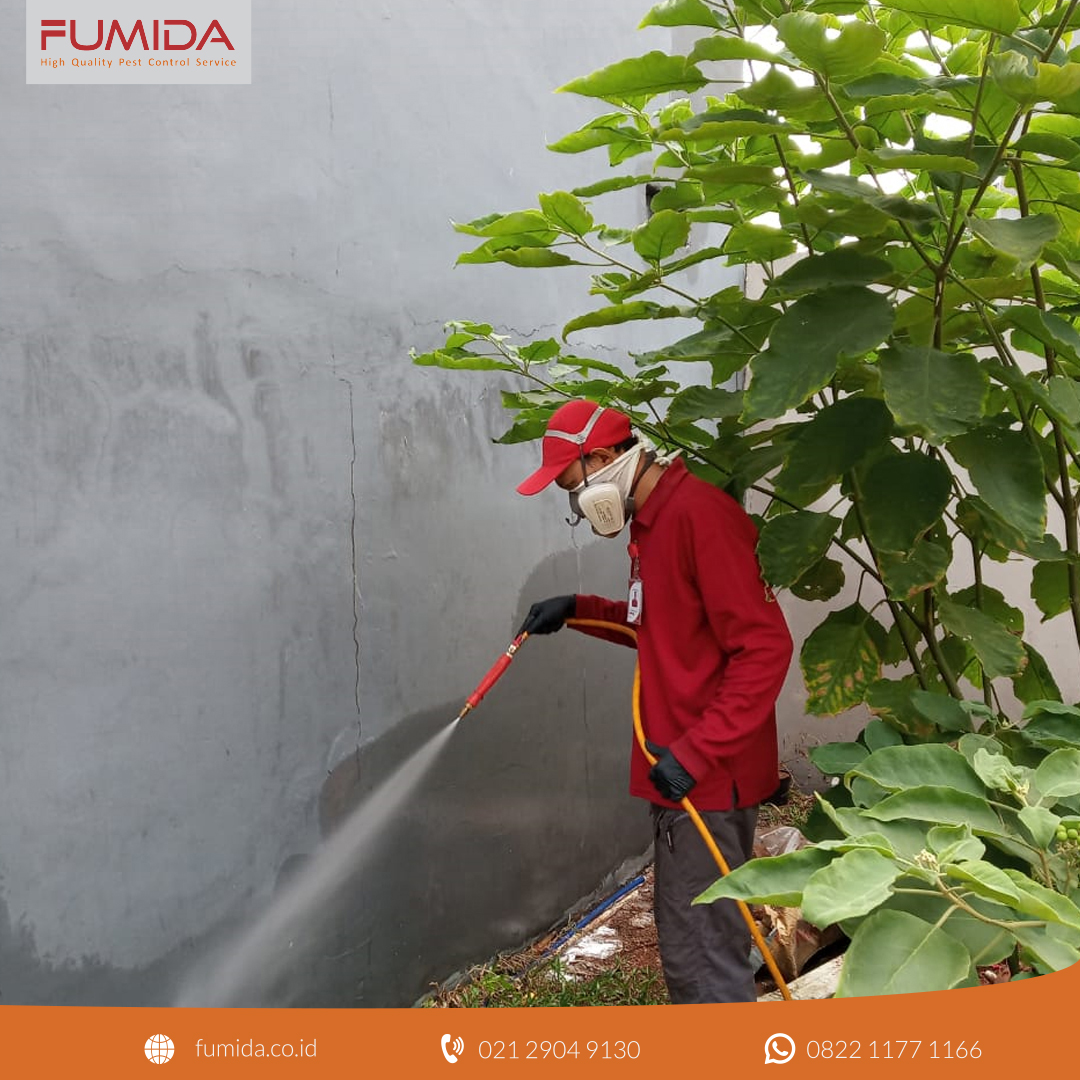
Alternatives To Termites' Fumigation For Indonesian Villas Like Jakarta
Indonesian villa owner were taught that tent fumigation was the only option to combat subterranean pests infiltrating wall cavities, ceiling spaces, as well as embedded wooden beams. This notion is propagated by fumigation businesses and maintained by homeowners' fear. The tent descends and the neighbors complain that the family has to leave for three days, and then the colony inside dies. The colony in a garden which has not been exposed to gas is then able to rebuild the foraging tunnels. They will return to the structure with 18 months. Fumigation sterilizes the building however it doesn't affect the landscape reservoir. Jakarta's anti-termite business, which serves the villa industry, provides viable alternatives as part of its competitive positioning. Estates that have eight bedrooms in Pondok Indah or a vacation property in Puncak are not interested in tenting. They want the colony to be eliminated without the spectacle, the evacuation, and the certainty of re-infestation.
1. Baiting and Fumigation both destroy the colony.
Tent fumigation is a technique of administering lethal gas into all spaces that are void inside the building envelope. The whole termite colony within the structure is destroyed. The colony under the driveway, under the garden and beneath adjacent properties doesn't die. Baiting is a toxic agent that enters the colony nucleus via trophallaxis. The colony dies. The structure becomes reinfestation-resistant because the source population is eliminated. Fumigation is rarely chosen by homeowners who have twice mastered the distinction.
2. The heat treatment penetrates into areas where gas cannot
Whole-structure heat treatment raises the internal timber temperatures to 50 degrees Celsius and lasts for a full hour. This process eliminates all life stages including eggs, and does not require tenting. It can be applied on Indonesian villas featuring open beams, or elaborate carvings. Equipment is available. Contractors are in existence. The problem is not technology, it is the homeowner's awareness that alternative solutions exist.
3. Electro-Gun Technology For Localized Infection
Infestation zones are heated until the point of death using high-frequency devices. These devices do not cause harm to the surrounding materials. Homeowners who notice termites active within a single carved wood door frame or single roof truss are able to apply electro-gun treatments in order to get rid of the infestation in just one visit, without needing to evacuate the home. Jakarta exterminators don't import this method of treatment because it's not experimental.
4. Wood Injection Systems Preserve Architectural Fabric
The borate liquid formulations which are injected into drill holes under pressure migrate through the wood using capillary action. This renders the entire substance toxic to termites for years. The holes in the nail are deeper than the drill holes. The carving remains intact. The door frame hasn't been taken away. Indonesian villa residents often refuse the treatment because exterminators recommend that they do it after having already recommended replacement. In the event of replacement, the offer are generally accepted.
5. Above-Ground Baiting to Hidden Cavity Colonies
When Coptotermes gestroi creates an aerial carton nest inside walls or roof spaces, tent fumigation is the preferred method. The bait stations above ground that are encased in the active tubes of mud that rise from the baseboards and ceiling corners, release the toxicant directly to nest populations. The colony will eat its construction workers when they return through the baited tube. There is no tent. No evacuation. Between six and eight weeks.
6. Nitrogen Freezing for Small-Scale Heritage Components
Termites in wood get frozen rapidly by liquid nitrogen that circulates throughout the wood. The freeze is followed by thaw, then repeat. It is cryogenic baiting and not chemical manipulation. The freezing of nitrogen helps preserve the patina of antique or museum high-end Javanese carvings and furniture.
7. Physical Barrier Retrofits Help Prevent Re-infestation
The home that smokes year after year, and has never put up physical barriers, rents temporary sterility. The perimeter excavation of stainless steel mesh and polymer sheets stops termites below ground from entering a structure. If it is paired with an permanent exclusion system, fumigation options can be very compelling. The combination is sold by baiting to kill the colony, then installing the barrier so that it's the last colony to ever be able to occupy the structure.
8. Carbon Dioxide Purging for Enclosed Spaces
Pressurized carbon dioxide introduced into the attic space that is sealed or crawl spaces can displace oxygen to a deadly concentration for termites trapped within these voids. This is a situation that requires a limited amount of containment, but not full-building tenting. CO2 disperses quickly and leaves no residues and poses no risk to occupants, when guidelines for reentry are adhered to. Indonesian buildings that have only roofing structures that are which are affected by termites don't get adequately treated by fumigation.
9. Information on Baiting Timelines and Baiting Timelines upstream
The termites are killed by fumigation in just seventy-two hours. Baiting kills the colony in between six and eight weeks. When the timeline is revealed after mobilisation, villa owners who are used to tenting's speed will not accept baiting. Disclosed before contract execution the timeframe is accepted as a cost of avoiding evacuation. Jakarta anti-termite services that conceal the duration of baiting until after the proposal is made are manufacturing their own close rate problems.
10. The Reservoir Colony Must Be Identified and Targeted
In Jakarta, every villa is within a few feet of at least ONE colony regardless of whether it is an open space, a cemetery, or in an undeveloped area. Fumigation does not take into consideration this colony. This colony is also disregarded through heat treatment, injection or baiting, unless they are specifically used beyond the perimeter of the building. Another option for fumigation are landscaping baiting grids that are designed to target the colonies on the outside that would otherwise reinfest the house in the course of 18 months. If the exterminators only treat the structure, they're not delivering a long-lasting solution.
Conclusion
Indonesian homeowners are not keen on having their homes evacuated. They do not want tenting equipment erected on their manicured lawns. They don't like neighbors asking if their home is plagued. What they are looking for is the colony dead and the certainty that it won't come back. Fumigation is a reliable way to accomplish the first and second objectives however it fails to provide the third. Baiting, heat treatments, wood injection with microwave technology nitrogen freezing, CO2 purging, and physical barrier retrofits accomplish both objectives when implemented as integrated protocols instead of other alternatives. Jakarta anti-termite solutions that present themselves as alternative fumigation providers--carrying different elimination methods, educating technicians in species-specific protocol selection and logging results from reinfestation prevention will capture the premium villa segment that is currently held by tenting companies. The equipment investment has been significant. The investment in the training continues. The market demand is already in place. Villa owners are looking for "fumigation alternatives Jakarta" every day on a daily basis. Which exterminators with evidence-based alternatives and credible credentials will appear in the results of a search and which ones will continue to default to tents? Take a look at the recommended anti rayap jakarta for blog examples including pest control harga, jasa anti rayap, cara membasmi rayap kayu, jasa anti rayap tangerang, cara membasmi rayap kayu, kayu anti rayap, cara membasmi rayap di lemari, rayap rumah, jasa basmi rayap, pembasmi hama and more.
